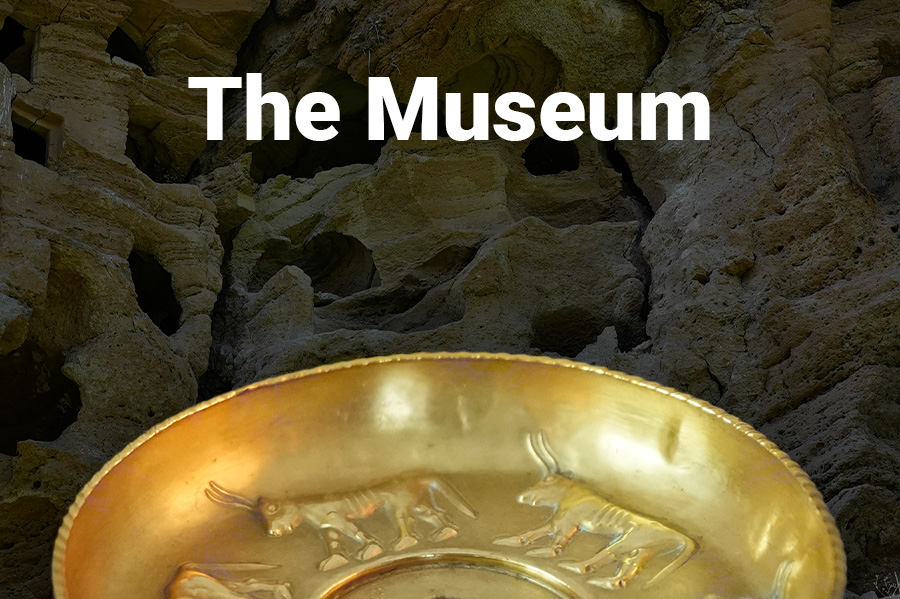
The Museum
Between Myth and History
Between Myth and History
Contact details and info tickets
Contact details and info tickets
The Sant’Angelo Muxaro Archaeological Museum (MuSAM) was established through a partnership between the Municipality of Sant’Angelo Muxaro and the Agrigento Branch of the Regional Authority for Cultural and Environmental Heritage.
Sant’Angelo Muxaro is an important site not only for its rich archaeological heritage, but also for a fascinating web of myths and legends centred around the mythical palace of Kamikos and the indigenous king Kokalos.
The Sant’Angelo Muxaro Archaeological Museum (MuSAM) was established through a partnership between the Municipality of Sant’Angelo Muxaro and the Agrigento Branch of the Regional Authority for Cultural and Environmental Heritage.
Sant’Angelo Muxaro is an important site not only for its rich archaeological heritage, but also for a fascinating web of myths and legends centred around the mythical palace of Kamikos and the indigenous king Kokalos.
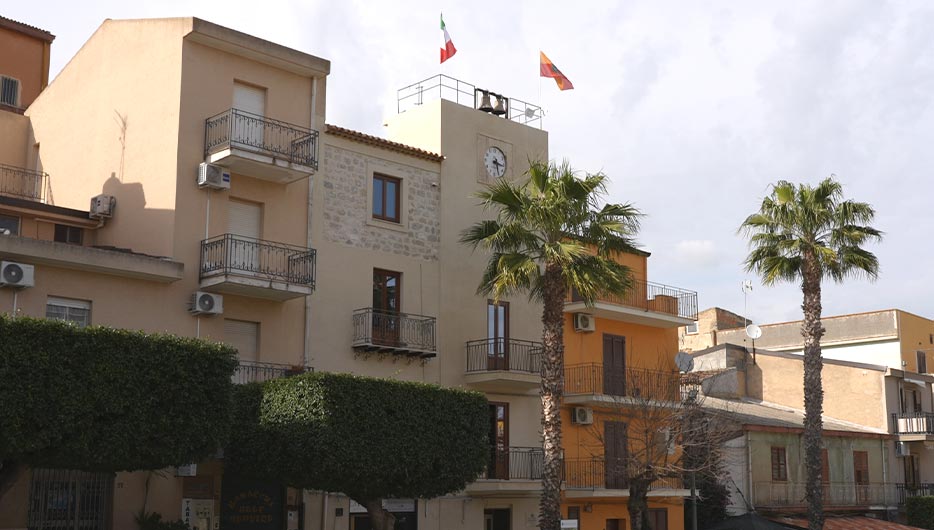
 Clock Tower (the first seat of the Town Hall), now home to the Municipal Library.
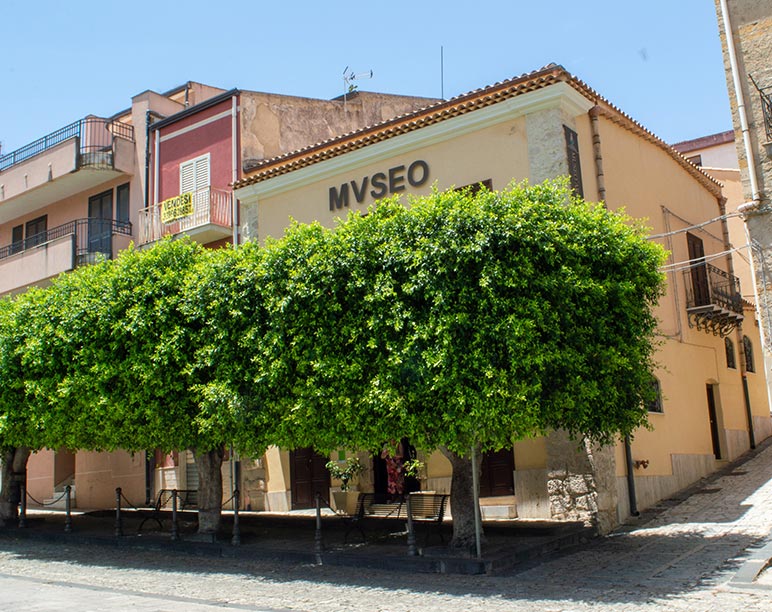
The 19th-century Palazzo Arnone, home to the Archaeological Museum.
Located in the 19th-century Palazzo Arnone, MuSAM extends over three floors, offering a visitor itinerary that highlights key aspects of the local area — from its geological formation to the numerous archaeological artefacts unearthed during recent excavations and discoveries. The findings from excavations carried out in the first half of the 20th century are preserved at the “Paolo Orsi” Regional Archaeological Museum in Syracuse and, to a lesser extent, at the “Pietro Griffo” Archaeological Museum in Agrigento.
Museum layout, designed with a focus on eco-sustainability and the use of recycled materials, tells the story of the territory — tracing its natural wealth, shaped by key resources such as salt, sulphur, and gypsum, as well as human history, spanning from the earliest prehistoric communities to medieval villages.
Located in the 19th-century Palazzo Arnone, MuSAM extends over three floors, offering a visitor itinerary that highlights key aspects of the local area — from its geological formation to the numerous archaeological artefacts unearthed during recent excavations and discoveries. The findings from excavations carried out in the first half of the 20th century are preserved at the “Paolo Orsi” Regional Archaeological Museum in Syracuse and, to a lesser extent, at the “Pietro Griffo” Archaeological Museum in Agrigento.
Museum layout, designed with a focus on eco-sustainability and the use of recycled materials, tells the story of the territory — tracing its natural wealth, shaped by key resources such as salt, sulphur, and gypsum, as well as human history, spanning from the earliest prehistoric communities to medieval villages.
The 19th-century Palazzo Arnone, home to the Archaeological Museum.
Why is Sant’Angelo Muxaro a place of great historical importance?
The territory of Sant’Angelo Muxaro was a key crossroads in Sicilian protohistory and during the Iron Age. It holds a significant archaeological heritage and bears witness to a complex and stratified past.
The presence of exquisitely crafted gold artefacts, such as phialae (ritual bowls) and rings, attests to site’s wealth and central role. Excavation campaigns carried out by the Authority have brought to light important evidence, enriching our understanding of an area that played a decisive role in the island’s ancient power dynamics.
MuSAM aims to tell the story of this wealth, from the geological peculiarities of the territory to the complex historical events that have shaped it, offering visitors a comprehensive and fascinating insight into its evolution over time.
How is this land linked to ancient legends?
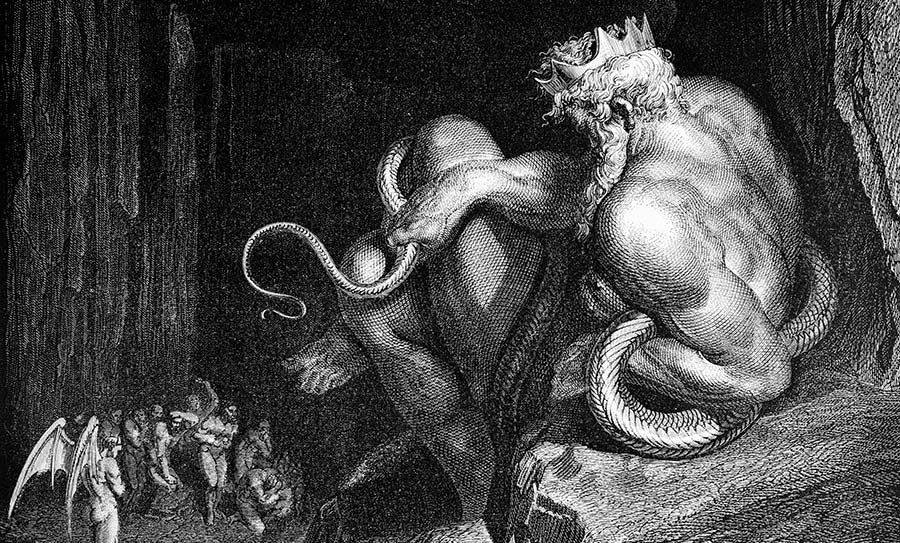
Sicania, described by Herodotus as the “region near Akragas”, is connected to mythical tales centred around the stories of the Cretan king Minos and the Sican king Kokalos.
The historian Diodorus Siculus recounts that Kokalos offered refuge to Daedalus, who had escaped the famous labyrinth of Knossos using wax wings, after having been imprisoned there by King Minos of Crete. As a sign of gratitude, Daedalus built the palace of Kamikos atop a steep, nearly impregnable hill, where Kokalos stored the rich treasures accumulated during his reign.
The frequent discovery of Aegean artefacts in Sicily attests to significant connections between the Eastern Mediterranean and the island, lending archaeological support to the myth of Daedalus and Minos, which has been passed down through literary sources.
The identification of Sant’Angelo Muxaro with ancient Kamikos gives the site a mythical dimension, firmly linking it to these ancient narratives and enhancing both its allure and cultural significance.

How is this land linked to ancient legends?
Sicania, described by Herodotus as the “region near Akragas”, is connected to mythical tales centred around the stories of the Cretan king Minos and the Sican king Kokalos.
The historian Diodorus Siculus recounts that Kokalos offered refuge to Daedalus, who had escaped the famous labyrinth of Knossos using wax wings, after having been imprisoned there by King Minos of Crete. As a sign of gratitude, Daedalus built the palace of Kamikos atop a steep, nearly impregnable hill, where Kokalos stored the rich treasures accumulated during his reign.
The frequent discovery of Aegean artefacts in Sicily attests to significant connections between the Eastern Mediterranean and the island, lending archaeological support to the myth of Daedalus and Minos, which has been passed down through literary sources.
The identification of Sant’Angelo Muxaro with ancient Kamikos gives the site a mythical dimension, firmly linking it to these ancient narratives and enhancing both its allure and cultural significance.