Archaeology
Traces from the past: buried artefacts and hidden secrets
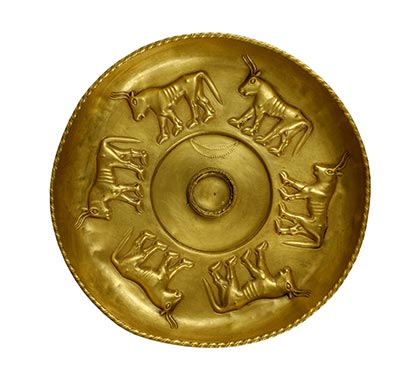
At the dawn of the 20th century, archaeologist Paolo Orsi began his first systematic research at Sant’Angelo Muxaro, a site already known for the accidental discovery of four precious golden phialae (ritual bowls).
Paolo immediately recognised the extraordinary importance of the site, especially because of the peculiar architecture of some tombs, characterised by a circular plan and an ogival elevation, which he himself defined as a “tholos”, thus establishing an unprecedented connection with Mycenaean architectural models.
Agli albori del XX secolo, l’archeologo Paolo Orsi intraprese le prime ricerche sistematiche a Sant’Angelo Muxaro, un sito già noto per il fortuito ritrovamento di quattro preziose patere auree.
L’Orsi intuì subito la straordinaria importanza del sito, in particolare per l’architettura peculiare di alcune tombe, caratterizzate da una pianta circolare e un alzato ogivale, che egli stesso definì “a tholos”, stabilendo un inedito collegamento con i modelli architettonici micenei.
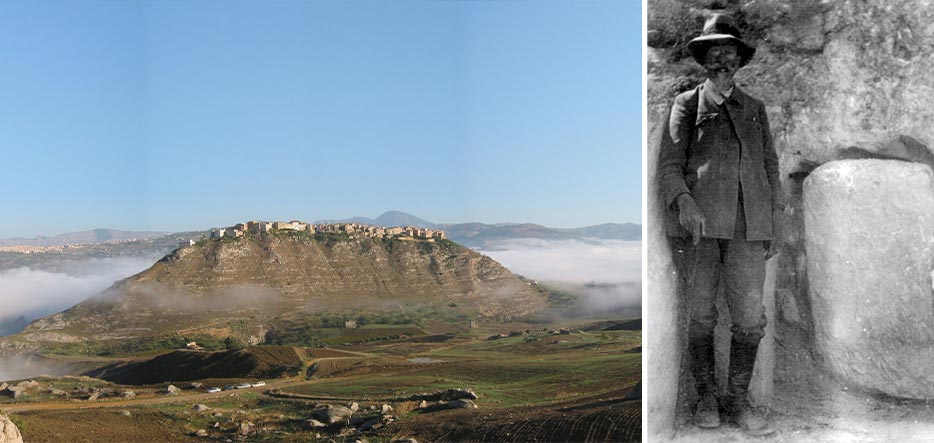
 View of the Hill of Sant’Angelo Muxaro; Paolo Orsi in 1931 in front of the entrance to Tomb IV.
The subsequent excavation campaigns at the necropolis on the southern slope of the hill revealed a complex system of tombs cut into the chalky rock bank, each containing multiple layered burials dating from the 13th to the end of the 6th century BCE.
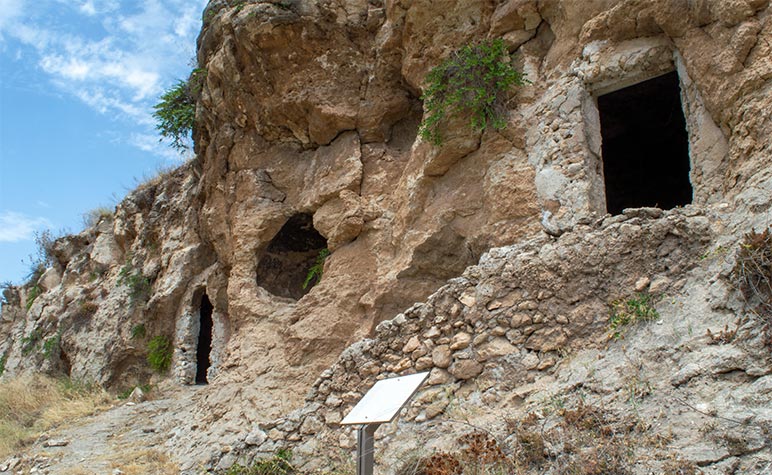
View of the monumental tombs on the southern side of the hill.
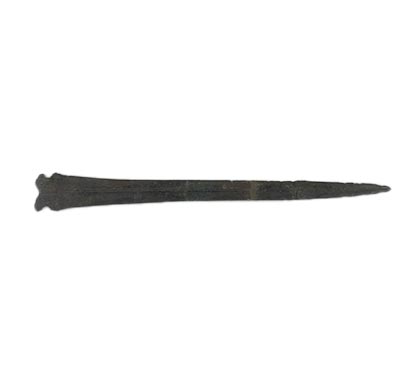
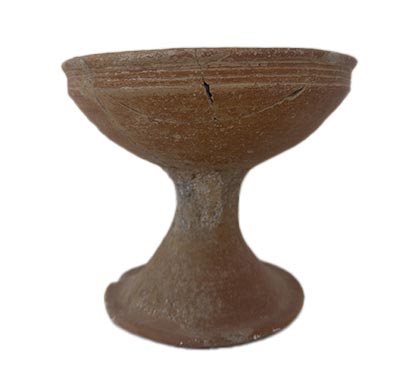
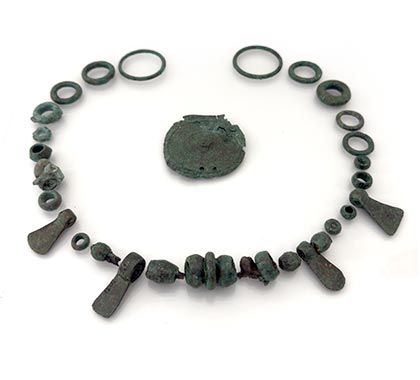
Some of the most impressive tombs include the so-called “Prince’s Tomb” (also known as the Grotta di Sant’Angelo, lit. “Cave of Saint Angelo”), along with Tombs II, IV, and VI. These monumental tombs, used over several generations, yielded rich grave goods including vases, cups, jugs, and personal bronze ornaments such as fibulae, pendants, and necklaces.
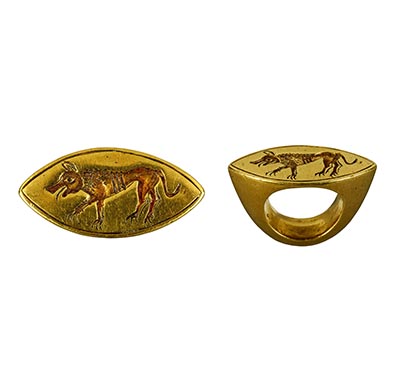
From Tomb VI comes the famous gold ring featuring a wolf engraved on the bezel, still placed on the finger of the deceased.
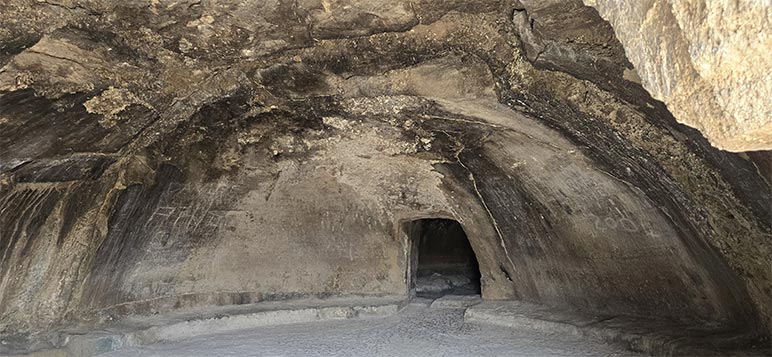
Interior of Room 1 of the Prince’s Tomb.
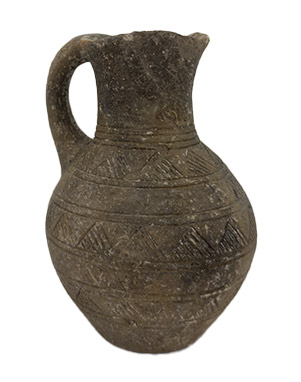
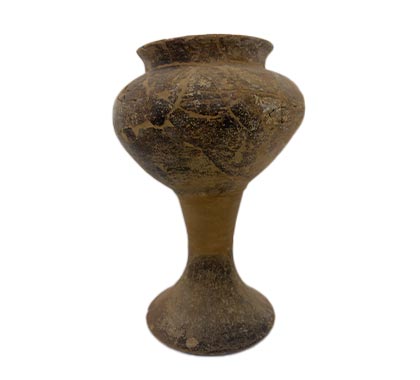
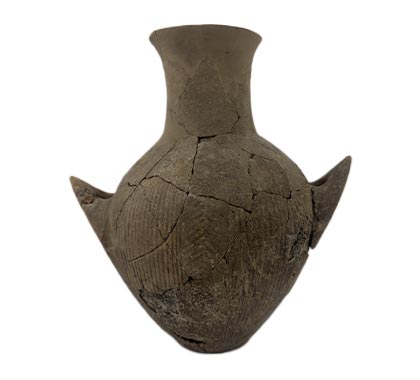
Amphorette with a dark surface and engraved decorations. 9th–8th century BCE
Recent excavation campaigns have uncovered around a hundred tombs, used over many generations between the 12th and 6th centuries BCE. These tombs yielded numerous artefacts, including jars for storing liquids and food, as well as personal ornaments made of bronze and silver.
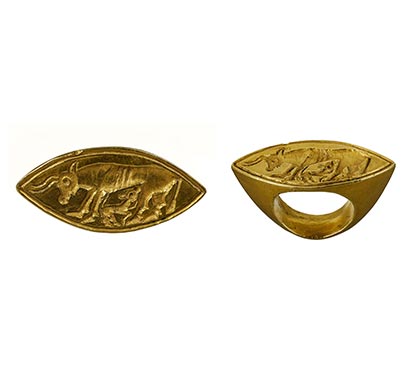
Sant’Angelo Muxaro gold complex, consisting of two decorated bezel rings, four golden phialae (i.e., ritual bowls, of which only one survives), various simple band rings, and small jewellery, remains unique in archaic Sicily both in terms of the quantity and quality of the objects found.
Recent excavation campaigns have uncovered around a hundred tombs, used over many generations between the 12th and 6th centuries BCE. These tombs yielded numerous artefacts, including jars for storing liquids and food, as well as personal ornaments made of bronze and silver.
Sant’Angelo Muxaro gold complex, consisting of two decorated bezel rings, four golden phialae (i.e., ritual bowls, of which only one survives), various simple band rings, and small jewellery, remains unique in archaic Sicily both in terms of the quantity and quality of the objects found.
Amphorette with a dark surface and engraved decorations. 9th–8th century BCE
Discovered
artefacts